
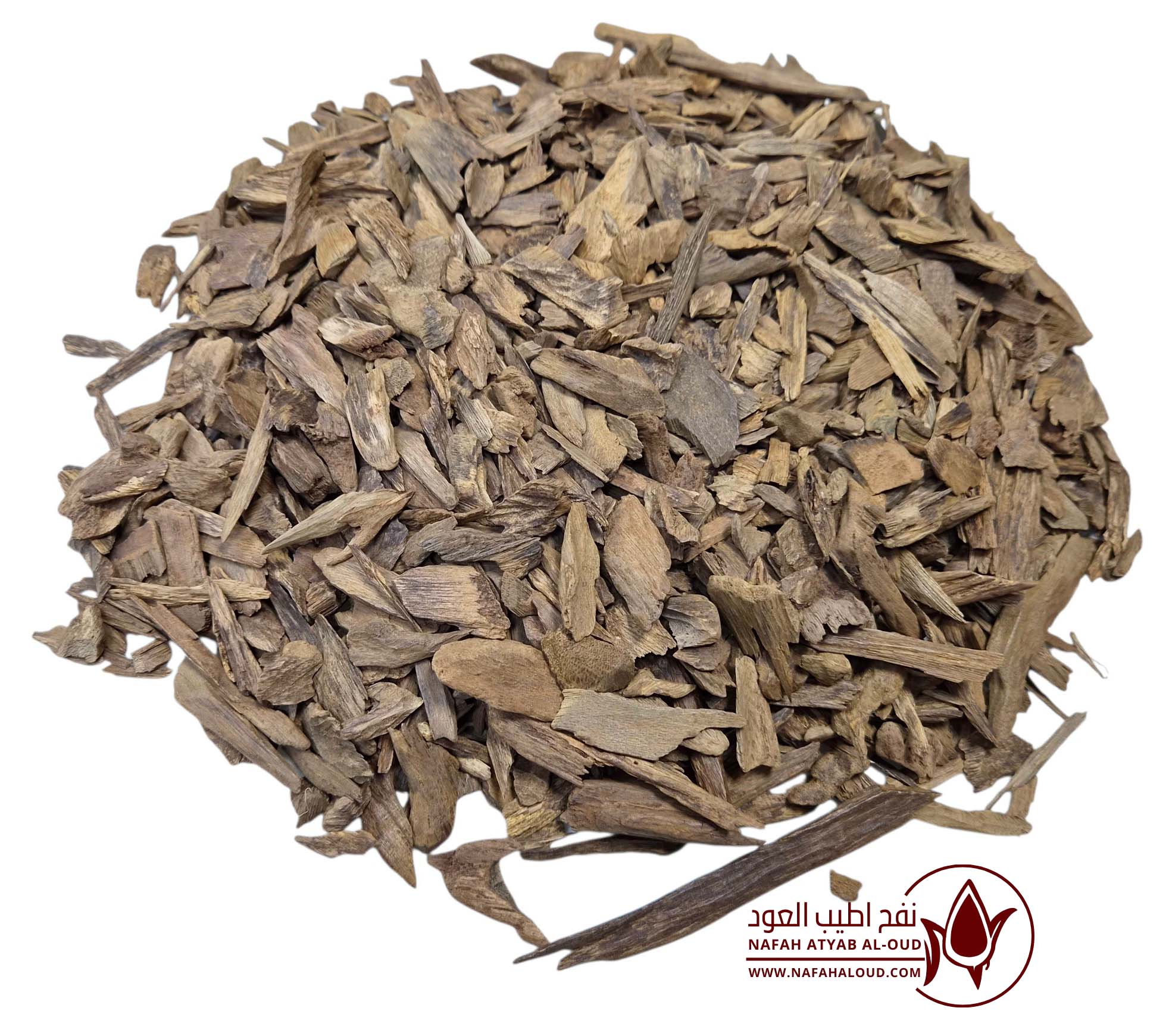
From the Nafah catalog: Natural Moroki High Oud [2524]. This illustrates the named product, not every country or region discussed in this article. Explore the catalog
48. Indonesian Papua oud: understanding the name before buying
Papua is a broad label that needs a country statement because it is not synonymous with Papua New Guinea. It may overlap with Moroki or Jayapura labels. Request greater precision if origin drives your choice.
Location or label scope: Indonesian Papua. This is a geographical or place-associated trade name rather than an independent botanical species. An official place record does not authenticate the origin of a retail piece.
Evaluate the aroma without trying to prove a country through smell. Woody, sweet and spicy can describe your experience, while provenance needs other information. Do not transfer the impression of one piece to every product sharing its label.
For an oud enthusiast’s gift, request written source and product information instead of relying on the nickname. Clarify whether the offer is unblended wood or an enhanced product. Do not compare Super and Double Super across sellers without their definitions.
If choosing it for Eid or a gift, test the intended heating method beforehand. Start with moderate heat and a small quantity according to burner instructions. Store unused pieces separately from fragranced bakhur and close the container after selection.
Article sources and their limits
- Indonesia Ministry of Tourism: destinationsGeographical context only.
- ACIAR: PNG community-based planted forests, final report (2022)Eaglewood and local/imported planting material; not Sepik batch authentication.
Sources support only their stated scope. Selection and use advice is editorial guidance, not authentication of a lot, its origin or its scent.
49. Jayapura / Jabura oud: understanding the name before buying
Jayapura is a documented place, while Jabura needs supplier confirmation as a trade rendering. Do not infer that every lot with that oral label came from the same location. Retain the original spelling with the batch description.
Location or label scope: Jayapura, Indonesia; Jabura requires spelling confirmation. This is a geographical or place-associated trade name rather than an independent botanical species. An official place record does not authenticate the origin of a retail piece.
Ask about the aroma under moderate heating rather than rely only on the smell inside the packet. Decide whether you value quiet detail or a presence suited to a majlis. The available evidence cannot promise one aroma for every batch bearing this name.
Choose by evaluating the aroma and reviewing batch information rather than a permanent ranking of countries. Ask what the commercial grade means and how the offered pieces differ. Verify the source if geography is the main reason for your choice.
For incense, start with a small chip in a suitable burner, following its instructions, and increase the quantity only if wanted. Test before guests arrive, ventilate the room and supervise charcoal. Keep unused wood clean and dry, away from sun, heat and strong fragrances.
Article sources and their limits
- Indonesia Ministry of Tourism: JayapuraGeography only.
Sources support only their stated scope. Selection and use advice is editorial guidance, not authentication of a lot, its origin or its scent.
50. Merauke / Moroki oud: understanding the name before buying
Moroki and Merauke are associated trade and geographical names, but that association does not prove every lot was harvested in Merauke. “Natural Moroki oud” still needs a treatment and production statement.
Location or label scope: Trade name associated with Merauke, Indonesia. This is a geographical or place-associated trade name rather than an independent botanical species. An official place record does not authenticate the origin of a retail piece.
Evaluating the aroma of the actual lot is more useful than comparing dramatic origin stories. Note what you enjoy and keep sensory observations separate from rarity and age claims. Premium should not have a fixed meaning without the seller’s sorting criteria.
Request photographs of the actual lot and the seller’s sorting criteria. Treat visible resin patterns and colour as inspection clues rather than final proof of authenticity or quality. For a gift, choose a product whose source and treatment you can explain clearly.
To compare presence in a room, use the same space and burner rather than change conditions between samples. Heat a small chip according to device instructions and keep unused wood away from heat and sunlight. Allow ventilation during the incense session.
Article sources and their limits
- Indonesia Ministry of Tourism: MeraukeGeography only; trade spelling does not authenticate harvest origin.
Sources support only their stated scope. Selection and use advice is editorial guidance, not authentication of a lot, its origin or its scent.
51. Mamberamo oud: understanding the name before buying
We found insufficient sensory evidence to establish Mamberamo as a distinct scent category. Ask for the spelling and source location; a less familiar label establishes neither rarity nor a higher grade.
Location or label scope: Mamberamo label, Indonesian Papua. This is a geographical or place-associated trade name rather than an independent botanical species. An official place record does not authenticate the origin of a retail piece.
When evaluating the aroma, record your impressions of woodiness, sweetness and sharpness rather than search for a presumed regional scent. If a seller calls a sample earthy, ask whether that describes heated wood or distilled oil. These are aroma descriptions, not provenance certificates.
For an oud enthusiast’s gift, request written source and product information instead of relying on the nickname. Clarify whether the offer is unblended wood or an enhanced product. Do not compare Super and Double Super across sellers without their definitions.
Start gently in a suitable burner rather than add several pieces at once on the first trial. For hosting, test ahead of the event and allow ventilation. Keep the rest of the batch in a clean container away from sun and surrounding fragrances.
Article sources and their limits
- Nafah: Types of Oud Around the WorldScope and observed commercial labels only; not independent verification.
- Indonesia Ministry of Tourism: destinationsGeographical context only.
Sources support only their stated scope. Selection and use advice is editorial guidance, not authentication of a lot, its origin or its scent.
52. Timika oud: understanding the name before buying
Timika is a location label rather than a resin-age statement. For large pieces offered under this name, ask whether all belong to the same lot. Size should not replace source information.
Location or label scope: Timika label, Indonesia. This is a geographical or place-associated trade name rather than an independent botanical species. An official place record does not authenticate the origin of a retail piece.
Compare the aroma with a familiar sample you already enjoy. Sweet, resinous and spicy can help describe your perception, but should not establish a country. Ask for a description of this particular lot rather than a ready-made profile applied to an entire region.
Choose by evaluating the aroma and reviewing batch information rather than a permanent ranking of countries. Ask what the commercial grade means and how the offered pieces differ. Verify the source if geography is the main reason for your choice.
For home hospitality, test a modest amount in the majlis before the occasion instead of beginning with a large quantity. Follow burner instructions, ventilate and never leave charcoal unattended. Keep the packet away from a sunny window or hot vehicle.
Article sources and their limits
- Indonesia Ministry of Tourism: destinationsGeographical context only.
Sources support only their stated scope. Selection and use advice is editorial guidance, not authentication of a lot, its origin or its scent.
53. Sorong oud: understanding the name before buying
Sorong is documented in official sources. Do not substitute it for Merauke in a product description. If a seller uses both names, ask which is a trading location and which is the claimed growing origin.
Location or label scope: Sorong, Indonesia. This is a geographical or place-associated trade name rather than an independent botanical species. An official place record does not authenticate the origin of a retail piece.
The consulted sources do not establish a uniform sensory standard for this label. Evaluate the opening aroma and what you enjoy as heating continues. A difference between your perception and the seller’s description does not by itself disprove origin.
Request photographs of the actual lot and the seller’s sorting criteria. Treat visible resin patterns and colour as inspection clues rather than final proof of authenticity or quality. For a gift, choose a product whose source and treatment you can explain clearly.
Evaluating oud does not require a large quantity. Begin with a small piece and moderate heating according to burner instructions, recording what you enjoyed. Close the container and keep it away from sunlight, retaining the supplier description for reference.
Article sources and their limits
- Indonesia Ministry of Tourism: SorongGeography only.
Sources support only their stated scope. Selection and use advice is editorial guidance, not authentication of a lot, its origin or its scent.
85. East Sepik oud: understanding the name before buying
East Sepik is a province in Papua New Guinea. Eaglewood is an agarwood term in the country’s context rather than a separate aroma profile. Request a species and source description instead of relying on the general common name.
Location or label scope: East Sepik, Papua New Guinea. This is a geographical or place-associated trade name rather than an independent botanical species. An official place record does not authenticate the origin of a retail piece.
Warm, sweet and sharp are human sensory impressions, and people need not agree on them. Evaluate the aroma separately, away from other incense so you can describe what you enjoy in the offered oud without blending several aromas.
Before buying, request a statement of wood source and whether fragrances or other substances were added. Ask about cultivation and induction when known. Look at several pieces, and do not make dark colour or sinking your only authenticity test.
For daily incense, choose a quantity you can evaluate easily and adjust to the room and your preference. Follow burner guidance and supervise charcoal. Do not spray perfume into the storage container; keep it dry and clean with the batch details.
Article sources and their limits
- PNG Tourism Promotion Authority: East SepikProvince geography only.
- ACIAR: PNG community-based planted forests, final report (2022)Eaglewood and local/imported planting material; not Sepik batch authentication.
Sources support only their stated scope. Selection and use advice is editorial guidance, not authentication of a lot, its origin or its scent.
86. Sandaun / West Sepik oud: understanding the name before buying
Sandaun and West Sepik name the same province, so they should not be presented as two varieties without an actual batch distinction. Also verify that the country is Papua New Guinea rather than Indonesian Papua.
Location or label scope: Sandaun / West Sepik, Papua New Guinea. This is a geographical or place-associated trade name rather than an independent botanical species. An official place record does not authenticate the origin of a retail piece.
If an offer lists specific notes, ask whether they describe the current batch or are general marketing language. Compare woodiness, sweetness and balance yourself. An attractive description should not replace material and production information.
Compare several pieces rather than only the most attractive photographed chip, and request a batch name on the invoice. If sinking is central to an advertisement, ask for material identification too. A water result does not fully document the wood.
If choosing it for Eid or a gift, test the intended heating method beforehand. Start with moderate heat and a small quantity according to burner instructions. Store unused pieces separately from fragranced bakhur and close the container after selection.
Article sources and their limits
- PNG Department of Finance: West Sepik/SandaunConfirms alternative province names.
- ACIAR: PNG community-based planted forests, final report (2022)Eaglewood and local/imported planting material; not Sepik batch authentication.
Sources support only their stated scope. Selection and use advice is editorial guidance, not authentication of a lot, its origin or its scent.
90. Moroki Hai / Hay / Irian: understanding the name before buying
Irian is a historical regional label in trade, while Hai/Hay has no scientifically established definition here. Do not translate the Arabic “hay” as proof of a living tree or non-induced wood. Request the supplier’s intended meaning in writing.
Treat the wording as a commercial designation needing explanation, not a species name or standardized quality guarantee. If natural appears alongside it, request a precise definition of what that statement covers in the current product.
Evaluating the aroma of the actual lot is more useful than comparing dramatic origin stories. Note what you enjoy and keep sensory observations separate from rarity and age claims. Premium should not have a fixed meaning without the seller’s sorting criteria.
For an oud enthusiast’s gift, request written source and product information instead of relying on the nickname. Clarify whether the offer is unblended wood or an enhanced product. Do not compare Super and Double Super across sellers without their definitions.
Use a clean burner and a small amount for evaluating the aroma, increasing heat gradually according to the device instructions. Thick smoke should not be the goal. Return unused wood to dry storage and retain the batch label so you can recognize the lot when buying again.
Article sources and their limits
- Nafah: Types of Oud Around the WorldScope and observed commercial labels only; not independent verification.
- GC-MS study of agarwood from different Asian countries (2018)Sample-level chemical differences, not guaranteed origin aromas.
Sources support only their stated scope. Selection and use advice is editorial guidance, not authentication of a lot, its origin or its scent.
100. Moroki Asqon / Ascone: understanding the name before buying
Asqon and Ascone appear as trade renderings, but we did not establish one official location uniting them. A wild-harvest or precise-origin claim needs records. Ask what the nickname means and how it relates to this lot.
Treat the wording as a commercial designation needing explanation, not a species name or standardized quality guarantee. If natural appears alongside it, request a precise definition of what that statement covers in the current product.
Evaluating the aroma of the actual lot is more useful than comparing dramatic origin stories. Note what you enjoy and keep sensory observations separate from rarity and age claims. Premium should not have a fixed meaning without the seller’s sorting criteria.
Read the entire offer and ask about differences between the name, photograph and invoice. Do not identify a species through colour alone. A wild or old claim deserves supplier evidence rather than a purchasing decision built on promotional wording.
For home hospitality, test a modest amount in the majlis before the occasion instead of beginning with a large quantity. Follow burner instructions, ventilate and never leave charcoal unattended. Keep the packet away from a sunny window or hot vehicle.
Article sources and their limits
- Nafah: Types of Oud Around the WorldScope and observed commercial labels only; not independent verification.
Sources support only their stated scope. Selection and use advice is editorial guidance, not authentication of a lot, its origin or its scent.
112. Papua New Guinea natural oud: understanding the name before buying
Eaglewood is used for agarwood in Papua New Guinea. Forestry research documents local trees and planting initiatives using imported material, so a country name alone establishes neither species nor wild origin.
Location or label scope: Papua New Guinea. This is a geographical or place-associated trade name rather than an independent botanical species. An official place record does not authenticate the origin of a retail piece.
Compare the aroma with a familiar sample you already enjoy. Sweet, resinous and spicy can help describe your perception, but should not establish a country. Ask for a description of this particular lot rather than a ready-made profile applied to an entire region.
For daily use, choose a batch whose aroma you have tested within your budget. For Eid or welcoming guests, test it in your majlis beforehand. Inspect the pieces and ask about resin and additions rather than pay extra simply for a darker appearance.
Before a large occasion, test the available pieces in the intended room rather than rely on a description to set the quantity. Use a suitable burner, supervise charcoal and ventilate. Store unused wood clean, away from moisture sources and heat.
Article sources and their limits
- ACIAR: PNG community-based planted forests, final report (2022)Eaglewood and local/imported planting material; not Sepik batch authentication.
Sources support only their stated scope. Selection and use advice is editorial guidance, not authentication of a lot, its origin or its scent.